Character Qualities That People Like to Read Stories With
Teaching about character traits in reading tin be challenging but fun!
One of the hardest parts for kids is that in virtually pieces of literature, the grapheme traits are somewhat abstruse. The author doesn't directly tell the reader what the character is like, which forces kids to accept to learn to piece it together by making inferences based on what the character says and does.
So our job as teachers is to equip our miniature detectives with the tools they need to figure out what each character is really like. How do I do that in my classroom?
Here are 10 tips to use for character traits:
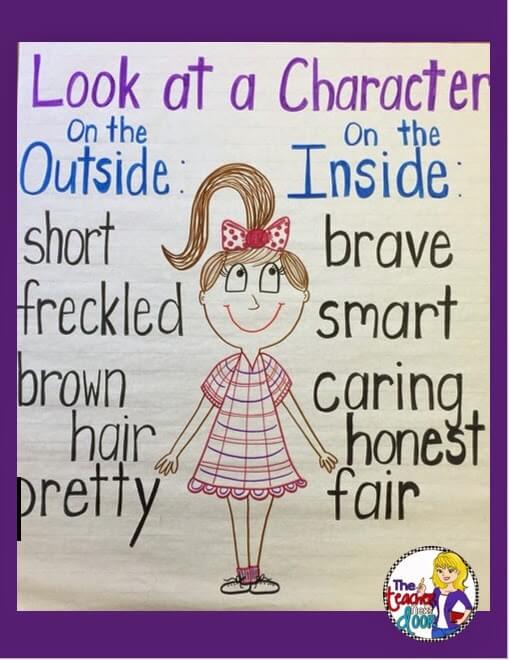
1. Ascertain Graphic symbol Traits
First, we ascertain character traits and talk almost what is and isn't a character trait. 1 of the things I use is this ballast chart to guide our discussions about a character's outward advent vs. his/her inner character.
And then we begin a list of graphic symbol traits on a divide anchor nautical chart equally a class. Of course, I already have a pre-made listing, merely part of the learning process here is to allow students to share their noesis and to work together to create a listing that is more than meaningful to them before we take sometime later on to enhance the list.
2. Evaluate Grapheme Traits as Positive, Negative, or Neutral
When the ballast chart with all of the grapheme traits is washed, I like to revisit it the next twenty-four hour period and talk almost the difference between positive and negative grapheme traits.
We go through the list and marking a plus or minus sign next to each trait. For those traits that could be viewed either fashion, we mark these with an "n" for neutral.
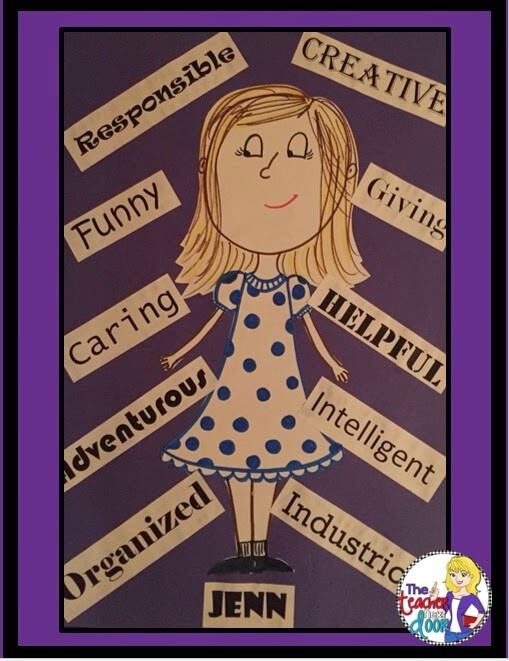
3. Practise an Art Project Involving Your Student's Graphic symbol Traits
The next thing we do is an art projection. There are a number of really skillful projects, like doing Wordles on the calculator, or making silhouettes, but I usually have the kids draw drawing caricatures which they characterization.
To do this, nosotros look at the character chart and the kids cull 10 of the character traits which describe themselves. After jotting these down on scratch paper, we head to the reckoner lab, where the kids type these using a variety of fonts in larger sizes. Nosotros print these and later cut them out and glue the words around our cartoons.
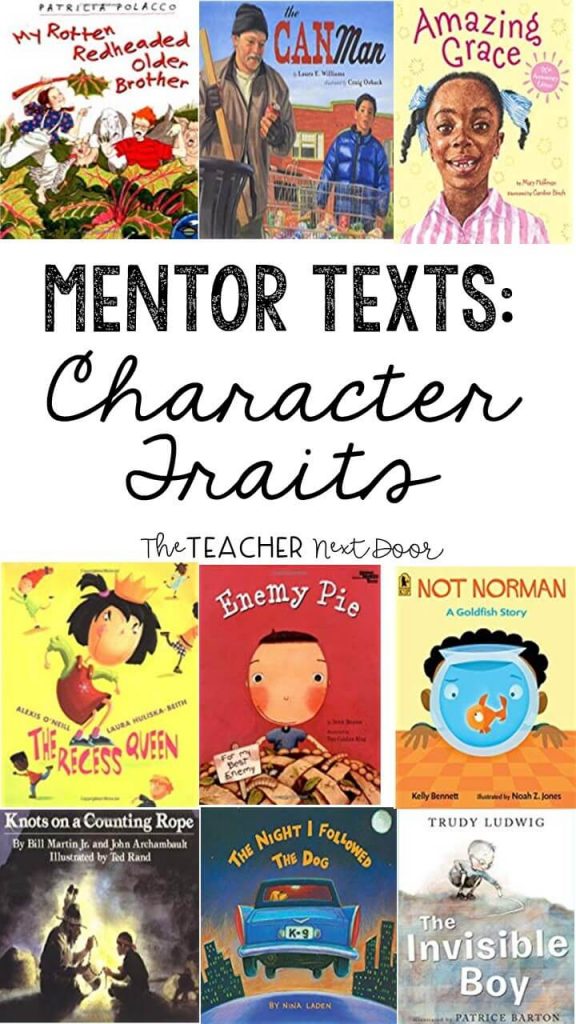
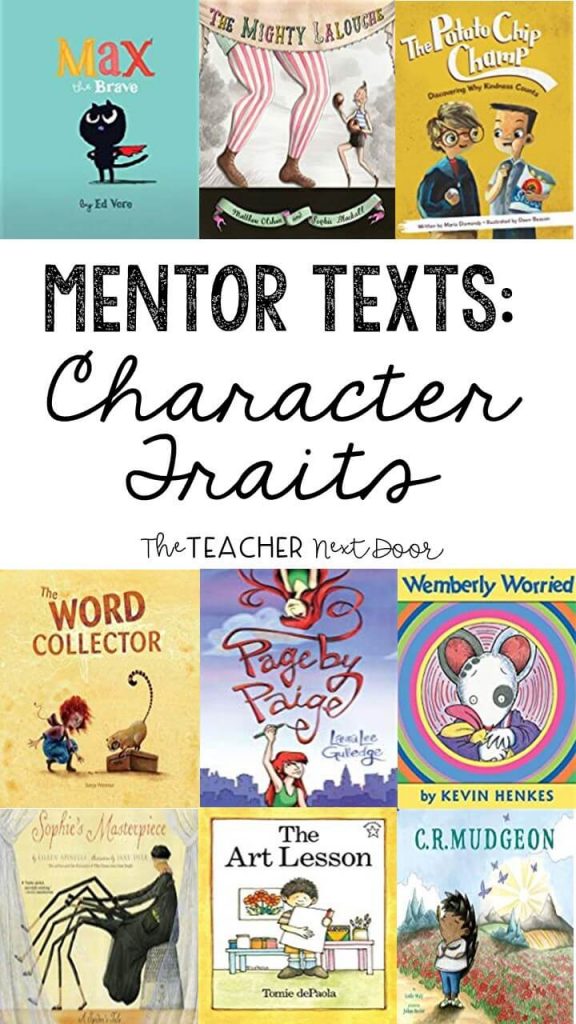
iv. Use Mentor Texts: Fiction
Once I feel that the kids have a basic knowledge of character traits, information technology's time to dig into text together. I honey choosing fiction in the class of mentor texts because they are brusk but oh, so rich!
Later on reading each book, we talk over each grapheme, what graphic symbol traits were shown, and how we know this. The "how nosotros know this" is an important part and can aid the kids practice searching for text evidence.
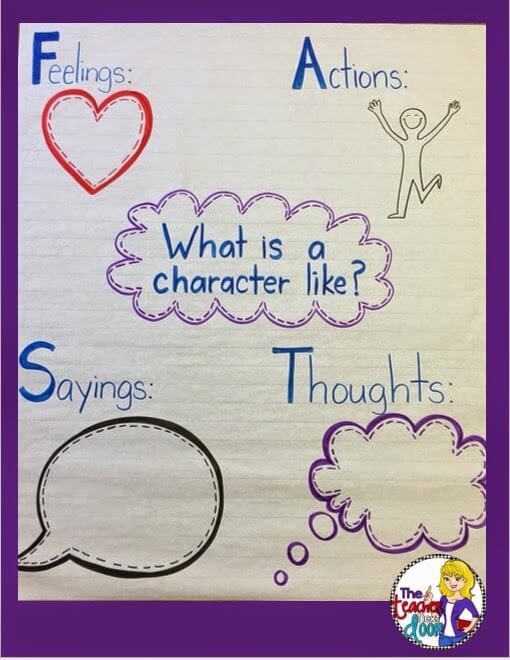
Ane of the strategies I utilize to help kids identify character traits is to teach them to use the acronym F.A.S.T., which stands for Feelings, Deportment, Sayings, and Thoughts. If kids are able to determine these things virtually the character, chances are, they'll "become" what the graphic symbol traits are.
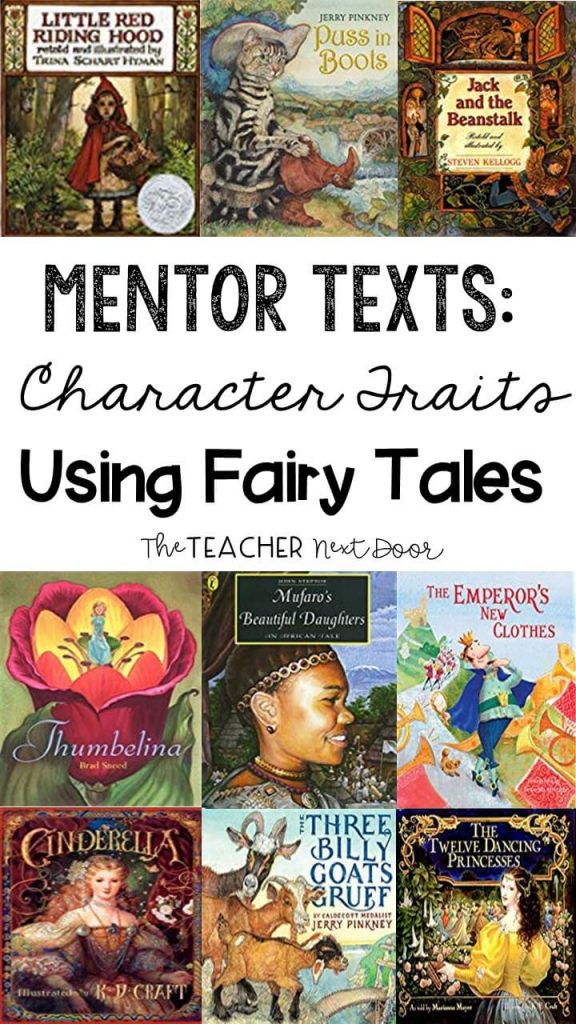
5. Use Mentor Texts: Fairy Tales
Besides using fiction, fairy tales are great to utilize because they ofttimes have very black and white type characters, which brand them ideal for identifying character traits practice. It's fun to compare and contrast the villains and the heroes, that are present in so many of these classic tales.
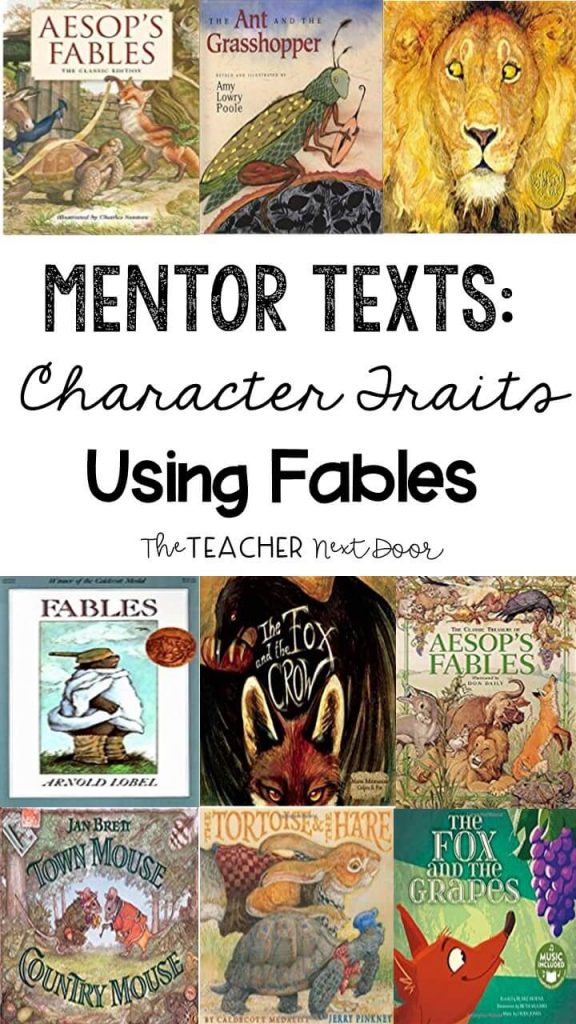
6. Use Mentor Texts: Fables
Fables are another treasure trove resource for character traits because the writers often portrayed them in simplistic or sometimes exaggerated ways to brand sure that the readers got the point of the story without much problem.
Fables also have the added "brusk text" bonus, which I love for practicing skills. Rather than reading 100 pages to figure out a character, we can exercise as a class and in 30 minutes or less, we can figure out several of them. Dearest that well-nigh fables!
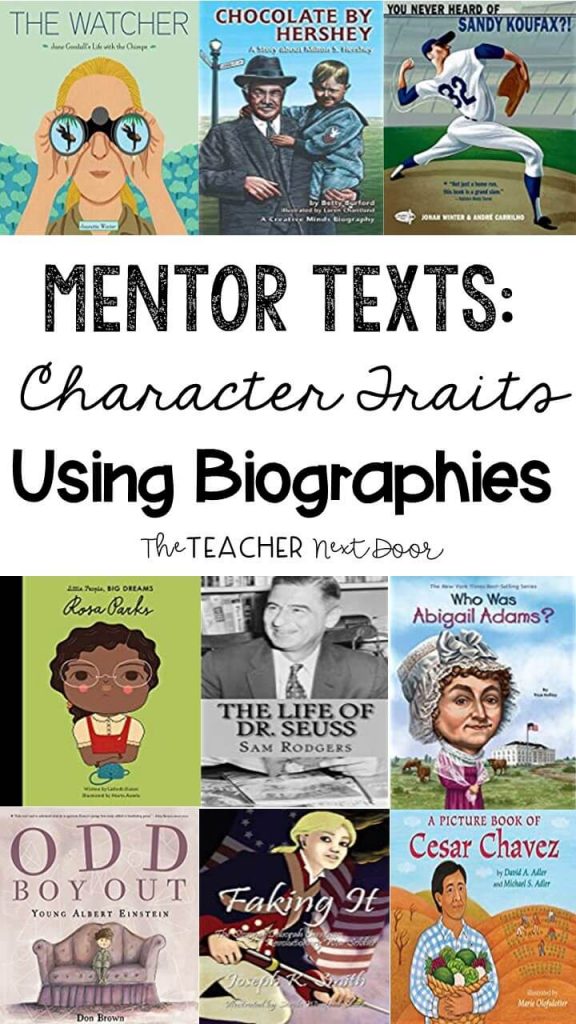
7. Employ Real People
Using existent people, whether it is a historical person from the social studies book, a famous person from a biography, or even the principal (if he/she is a great example, which I'm hoping would be the case), real people are super interesting for character traits examples.
Another plus to using historical figures is that they can aid yous integrate reading and social studies. In my mind, that's crawly!
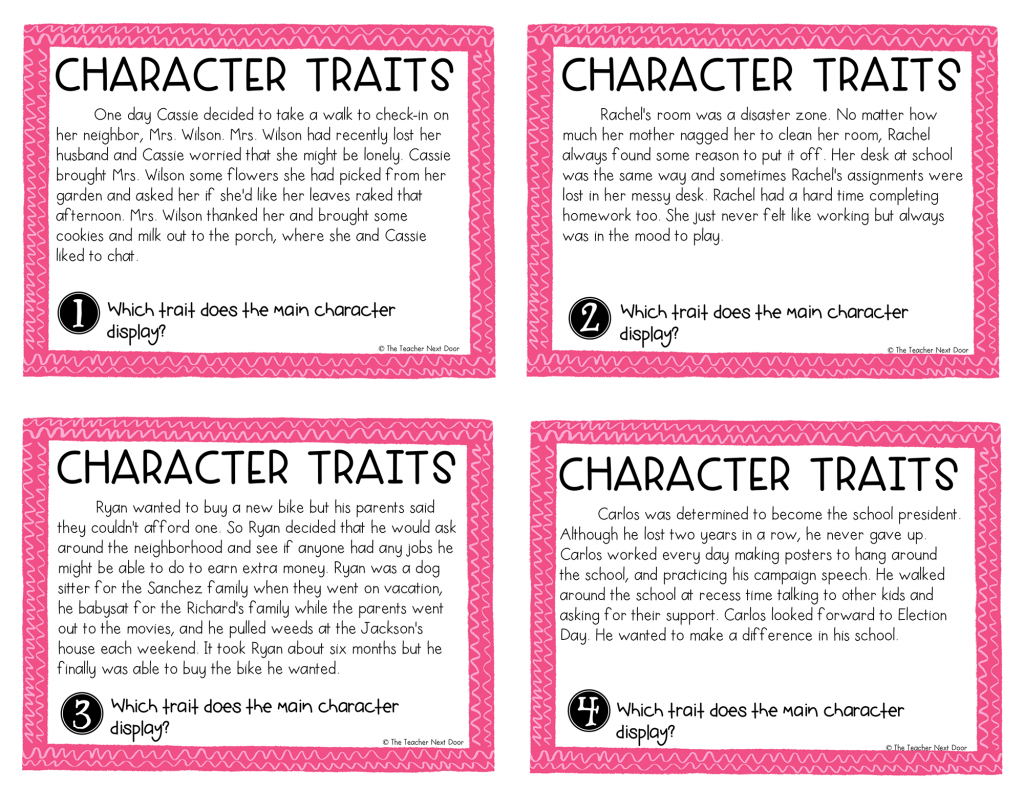
8. Use Task Cards
Task cards are always one of my favorite things to use in the classroom. When kids think of task cards, they usually think "game" or "fun" merely I think task cards are actually a "dandy learning opportunity!"
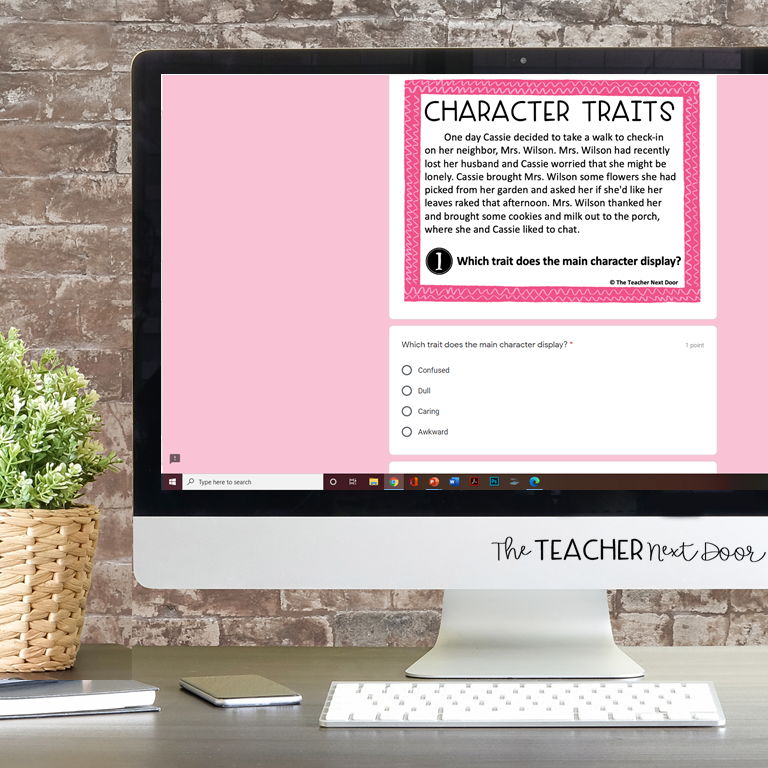
I created a set of Character Traits Task Cards Impress and Digital that I similar to apply that have mini-stories on each of the 32 cards. I similar to fix them around the room and give kids clipboards to write on but you lot could sure employ them as a whole class or at centers too. These give the kids some real concentrated practice.
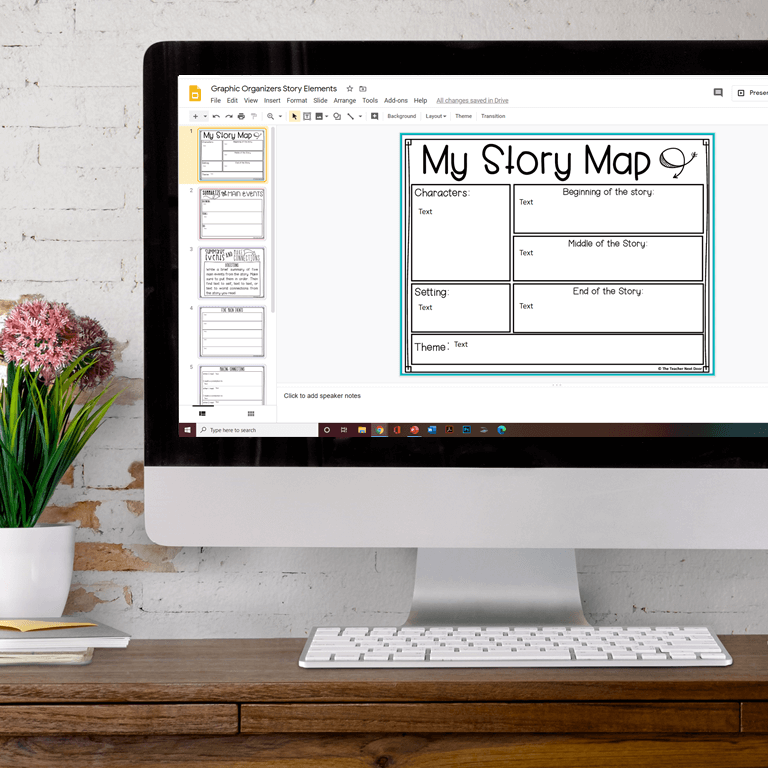
Characters, Settings and Events: Impress and Digital

9. Independent Work
At present that the kids have become fairly well versed in determining character traits, information technology's time to kicking the little birdies out of the nest a flake, so they can do some independent work. I love using lots of passages and graphic organizers from my Characters, Settings and Events: Print and Digital. With 48 pages (including 32 task cards), at that place's enough material to let the kids to become lots of practice with a variety of activities. And my favorite part…It includes both a impress AND a digital format to requite you greater flexibility in the classroom!
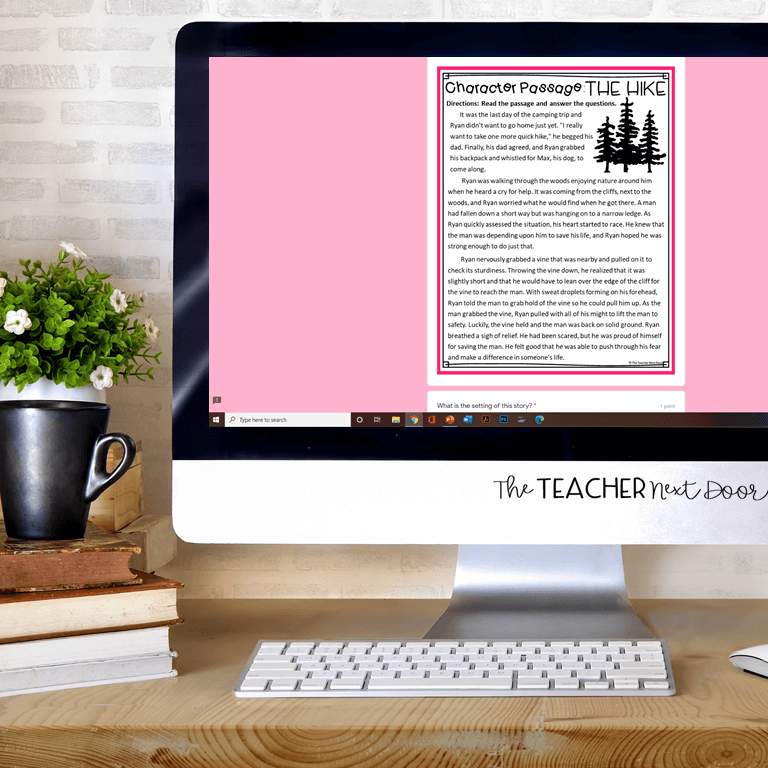
10. Review Throughout the Year
In one case the unit is done, we don't just fix it bated and forget almost it. Like everything we do, I attempt to continue to weave it in as we go. Even a simple question with each read aloud or every piece of literature the kids read can assist. "What character traits did you lot notice?" goes a long way towards keeping this concept fresh in the kid's minds.
Happy teaching! Thanks for stopping by!

Source: https://the-teacher-next-door.com/teaching-character-traits-in-reading/
0 Response to "Character Qualities That People Like to Read Stories With"
Post a Comment